What You Need to Know About Semen Health

Fresh Springs Medical Services
Fresh Springs Medical Services
MALE INFERTILITY
*What You Need to Know About Semen Health*
In Nigeria and across Africa, conversations about fertility often focus primarily on women. However, male factors contribute to approximately 30–50% of infertility cases, making semen health an equally important part of family planning and conception.
Unlike female fertility, which depends on a limited egg reserve throughout a woman’s lifetime, male fertility functions like a dynamic “production line”-constantly producing new sperm and heavily influenced by lifestyle, environmental factors, and overall health.
*The Three Pillars of Sperm Quality*
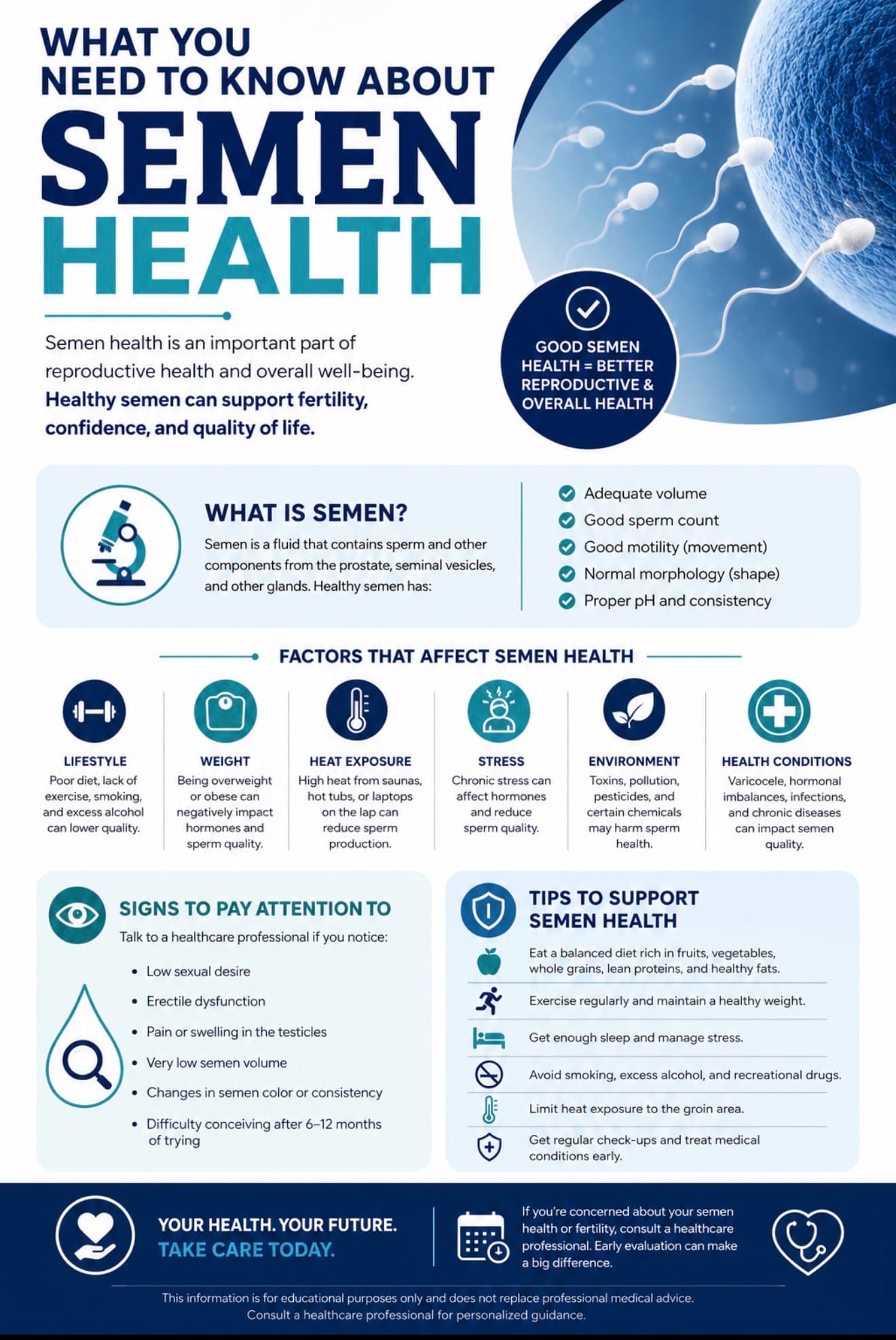
Semen health is more than simply “normal” or “abnormal.” A standard semen analysis evaluates three major parameters:
1. Sperm Count (Concentration)
This measures the number of sperm present in a semen sample. A healthy sample typically contains at least 15 million sperm per milliliter.
2. Sperm Motility (Movement)
Motility refers to the sperm’s ability to swim effectively toward the egg. Ideally, 32–40% or more should show progressive forward movement.
3. Sperm Morphology (Shape)
This evaluates sperm structure. Healthy sperm generally have an oval-shaped head and a long tail, both necessary for successful fertilization.
DNA Fragmentation: The Hidden Factor
In some cases, fertility specialists also assess sperm DNA fragmentation. Even when count and motility appear normal, damaged sperm DNA may contribute to failed fertilization, poor embryo development, or miscarriage.
Heat: A Silent Threat to Male Fertility
One of the most overlooked threats to male fertility in tropical regions like Nigeria is heat exposure.
The testes are designed to function at a temperature 2°C to 4°C below normal body temperature. When this balance is disrupted, sperm production can suffer.
Tropical Heat Stress
Daily temperatures above 30°C can place strain on the body’s cooling systems, potentially affecting developing sperm.
The “Sedentary Heat Trap”
Modern work culture often involves prolonged sitting-sometimes 10 to 12 hours daily-which can increase scrotal temperature by trapping heat.
Additional risk factors include:
Working long hours with a laptop on your lap
Long-distance driving (especially truck drivers)
Tight clothing or underwear
Frequent sauna or hot bath use
*Myths vs Reality*
Myth 1: “Saving up” sperm improves pregnancy chances
Many couples believe abstaining from sex for long periods before ovulation improves fertility. In reality, prolonged abstinence may increase sperm DNA damage, particularly in hot climates.
Best practice: Ejaculation every 2–3 days may help maintain healthier, more motile sperm.
Myth 2: “I already have a child, so fertility isn’t a problem”
This is not always true.
Secondary infertility-difficulty conceiving after previously fathering a child-is common. Age, weight gain, stress, illness, or lifestyle changes can significantly alter semen quality over time.
A 3-Month Reset: Optimising Your Fertility
Because sperm take approximately 74–90 days to mature, lifestyle improvements made today can positively influence semen quality within about three months.
1. Prioritise Cooling
Wear loose-fitting boxer shorts instead of tight briefs.
Avoid prolonged sitting; stand and walk every hour.
Keep laptops off your lap.
2. Improve Nutrition
Combat oxidative stress with antioxidant-rich foods such as:
Berries
Citrus fruits
Leafy vegetables
Walnuts
Support testosterone production with zinc-rich foods, including:
Seafood
Pumpkin seeds
Beans
Lean meats
3. Eliminate Harmful Habits
Smoking and vaping damage sperm structure and DNA.
Excess alcohol disrupts hormones like Follicle-stimulating hormone and Luteinizing hormone, both essential for sperm production.
Avoid recreational drugs.
*When Should You Seek Medical Help?*
Lifestyle changes can help, but certain symptoms require prompt medical evaluation.
Consult a fertility specialist if you experience:
Blood in semen
Testicular pain or swelling
Low semen volume
Reduced libido
Difficulty ejaculating
Symptoms of a sexually transmitted infection
A simple semen analysis can often identify hidden issues affecting fertility.
If Your Semen Analysis Is Not Ideal
Receiving suboptimal semen results can feel discouraging-but it should never be viewed as an individual failure.
Infertility is a shared challenge, best approached as a team.
Helpful steps include:
Making lifestyle changes together
Attending appointments as a couple
Exploring available fertility treatments
Supporting one another emotionally
Modern fertility medicine offers many effective options and pathways to parenthood.
The Bottom Line
Taking charge of your semen health is one of the most proactive steps a man can take toward building a family.
If you have been trying to conceive for:
12 months (if the female partner is under 35), or
6 months (if the female partner is 35 or older),
it may be time for a fertility evaluation-including a semen analysis.
Knowledge leads to action.
Action creates opportunity.
And opportunity builds families.