IVF Success and Age

Fresh Springs Medical Services
Fresh Springs Medical Services
IVF Success and Age
In Vitro Fertilization (IVF) is one of the most effective fertility treatments for couples who are having difficulty getting pregnant. However, age plays a major role in the success of IVF. As a woman grows older, the number and quality of her eggs naturally decrease, which can affect the chances of pregnancy.
Understanding how age influences IVF success can help patients make informed decisions about their fertility treatment.
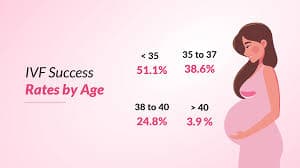
IVF Success Rates by Age
Women Under 35
Women under the age of 35 generally have the highest success rates with IVF. Studies show that about 55% of IVF cycles result in a live birth in this age group. Egg quality is usually good, and the ovaries respond well to fertility medications.
Women Aged 35–37
For women between 35 and 37 years, IVF success rates begin to decline slightly. The chance of a live birth is around 40% per cycle. Although fertility is still relatively good, egg quality may start to reduce.
Women Aged 38–40
Between 38 and 40 years, the success rate drops further to about 25–27%. At this stage, both the number and quality of eggs decline more noticeably, which may affect embryo development and implantation.
Women Over 40
For women above 40 years, IVF success rates decrease significantly, with success rates averaging around 7–10% when using their own eggs. Because egg quality declines rapidly at this age, some women may consider donor eggs, which can greatly improve success rates.
Why IVF Success Declines with Age
Several biological factors explain why IVF becomes less successful with increasing age:
1. Reduced Egg Quantity
Women are born with a fixed number of eggs. As they age, the number of available eggs decreases.
2. Poor Egg Quality
Older eggs are more likely to have chromosomal abnormalities. This can lead to poor embryo development, implantation failure, or miscarriage.
3. Lower Ovarian Reserve
Ovarian reserve refers to the number of eggs left in the ovaries. A lower ovarian reserve means fewer eggs can be retrieved during IVF.
4. Embryo Quality
Embryos created from lower-quality eggs may not develop well or implant successfully in the uterus.
Other Factors That Affect IVF Success
Age is important, but it is not the only factor that affects IVF outcomes.
Number of IVF Cycles
Some couples may need two or three IVF cycles before achieving pregnancy. Success rates often increase with repeated attempts.
Fertility Problems
Conditions such as low sperm count, uterine abnormalities, hormonal disorders, or blocked fallopian tubes can influence IVF success.
Lifestyle Factors
Healthy lifestyle choices can improve IVF outcomes. Doctors often recommend:
- Avoiding smoking and alcohol
- Maintaining a healthy weight
- Eating a balanced diet
- Managing stress
IVF with Donor Eggs
For women with poor egg quality or very low ovarian reserve, donor eggs can significantly improve success rates. IVF using donor eggs may achieve success rates of 70–80%, because the eggs usually come from younger, healthy donors.
Key Takeaway
Age is one of the most important factors influencing IVF success. Younger women generally have higher chances of pregnancy, while success rates decline gradually after 35 and more sharply after 40.
However, modern fertility treatments, including donor eggs and advanced IVF techniques, continue to give hope to many couples who wish to have a child.
If you are considering IVF, early consultation with a fertility specialist can help you understand your options and improve your chances of success.