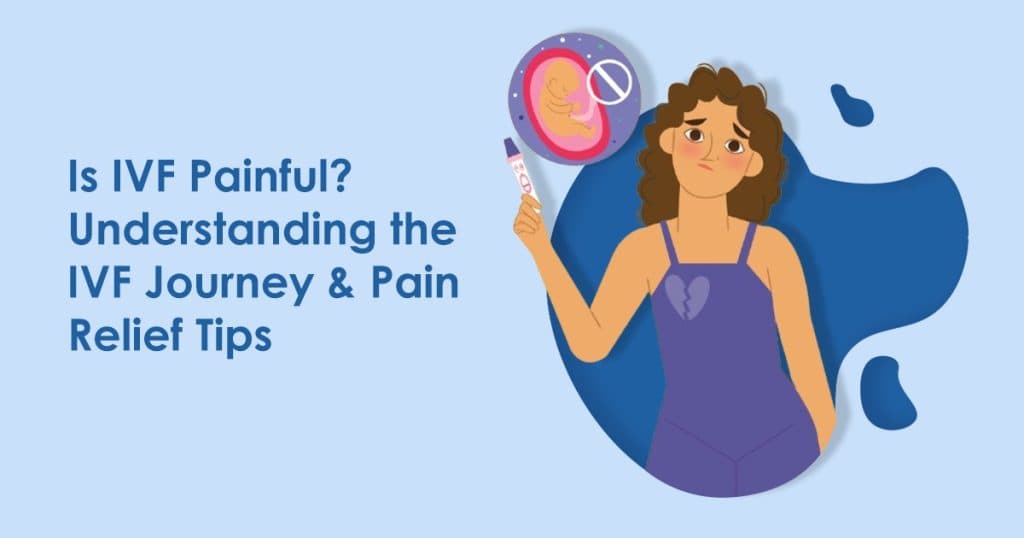
Is IVF Painful? An Honest Look at the Process

Fresh Springs Medical Services
Fresh Springs Medical Services
Is IVF Painful? An Honest Look at the Process
One of the most common questions we hear at Fresh Springs IVF is, “Will IVF be painful?” It’s a natural concern that creates anxiety for many couples starting their fertility journey. As specialists practicing in Nigeria , we believe in transparent, honest communication about what to expect.
The truth is: IVF involves some discomfort, but it’s typically manageable with today’s medical approaches. Most patients describe it as more emotionally challenging than physically painful. Let’s break down each stage honestly so you can prepare with confidence.
Phase 1: Ovarian Stimulation (The Injections)
What happens: You’ll self-administer or come to the hospital for daily hormone injections for approximately 10-12 days to stimulate your ovaries to produce multiple eggs.
The honest truth about pain:
The needles: Modern IVF uses subcutaneous injections with very fine, short needles (similar to insulin pens). Most patients are surprised by how minimal the pinch feels.
The medication: Some medications may cause a brief stinging sensation, but this lasts only seconds. Your nurse will teach you techniques to minimize this.
The real challenge: The psychological hurdle of self-injecting is often greater than the physical discomfort. Most patients adapt within 2-3 days.
Pro tips from our clinic:
Rotate injection sites (abdomen, thighs)
Apply ice for 1-2 minutes before injecting
Time injections with a daily routine (like after dinner)
Use distraction techniques – watch a show, listen to music
Phase 2: Monitoring Visits
What happens: You’ll visit the clinic every 2-3 days for vaginal ultrasound scans and possibly blood tests.
Pain level: Minimal
Vaginal ultrasounds: May feel slightly uncomfortable but not painful. We make the patients as comfortable as possible.
Phase 3: Egg Retrieval (The Procedure)
What happens: A minor surgical procedure to collect eggs from your ovaries, performed under sedation.
The honest truth: You will be asleep and feel nothing during the procedure.
Sedation: You’ll receive conscious sedation – not general anesthesia. You’re breathing on your own but in a deep, comfortable sleep-like state. Most patients remember nothing.
Procedure duration: Only 15-20 minutes
Afterwards: You’ll wake up in recovery. Most patients experience:
Mild cramping (similar to period cramps)
Some drowsiness from the sedation
Possible light spotting
Recovery: You’ll rest in our clinic for 1-2 hours, then go home the same day. We recommend taking the day off work.
Phase 4: Embryo Transfer
What happens: The simplest part of the process! A speculum is inserted (like a Pap smear), and a thin catheter transfers the embryo through the cervix.
Pain level: Very minimal
Most patients feel nothing more than mild pressure
No sedation needed – you’re awake and can watch on ultrasound if you wish
Takes only 5-10 minutes
You can return to normal activities immediately after
Managing Discomfort Throughout Your IVF Journey
Common Side Effects and How We Manage Them:
Bloating and abdominal discomfort (from stimulated ovaries)
Wear loose, comfortable clothing
Drink plenty of water
Avoid strenuous exercise
We monitor you closely to prevent severe OHSS
Mood swings and emotional sensitivity
Hormonal changes are real and valid
Communicate openly with your partner and our team
Practice gentle stress-reduction techniques
Fatigue
Listen to your body – rest when needed
Light walking can actually help with bloating
Maintain good sleep hygiene